 Stalion VTOL BNF
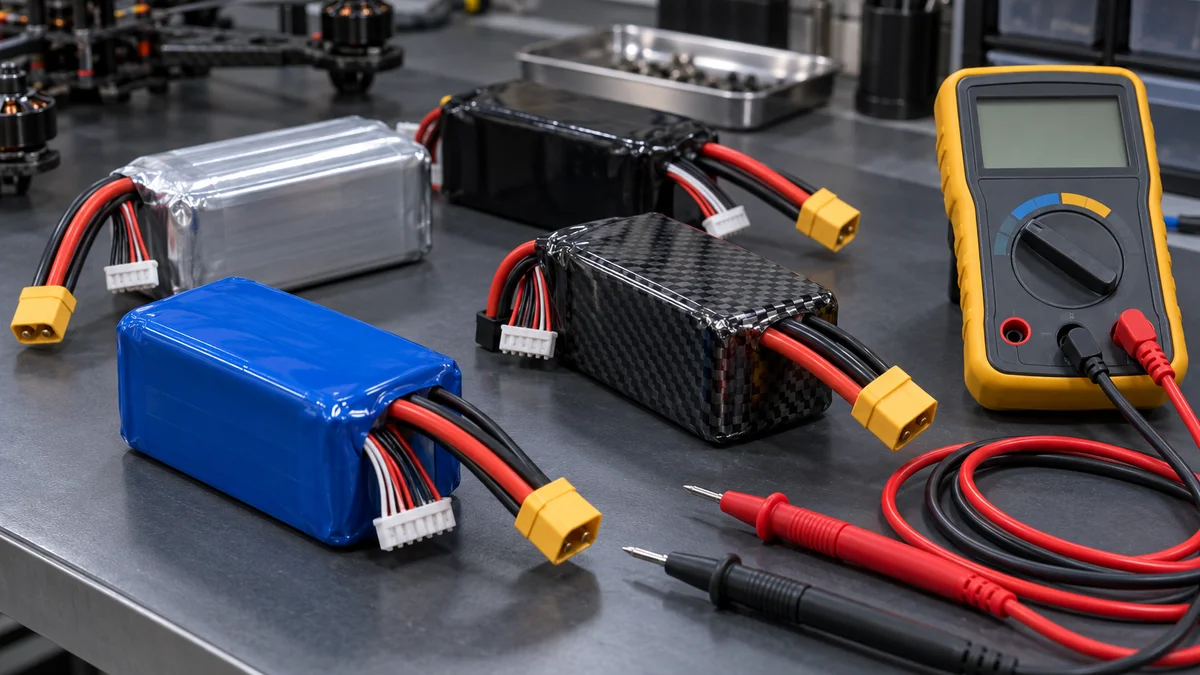
Power system selection for a vertical takeoff and landing drone represents a classic engineering compromise. Multirotor hover requires high burst amperage, while fixed-wing cruising benefits most from maximum watt-hours per gram.
The Energy Density Advantage of Li-Ion 21700 Cells
Modern lithium-ion cells based on the 21700 form factor, such as Molicel P42A or P45B, offer gravimetric energy densities exceeding 250 Wh/kg. This is nearly double the energy density of conventional lithium-polymer (LiPo) batteries. For fixed-wing cruise, where power consumption drops dramatically, Li-Ion packs unlock flight times well over an hour.
The High-Discharge Demands of Vertical Hover
The primary challenge with Li-Ion cells is their higher internal resistance compared to LiPo chemistry. During the initial 30 to 60 seconds of vertical takeoff, four lift motors draw heavy current. If a Li-Ion pack is under-sized, excessive voltage sag can trigger low-voltage alarms or premature return-to-launch triggers.
When to Fly LiPo vs Li-Ion
Your flight profile determines the optimal battery choice for the Stallion VTOL BNF:
- Choose 4S Li-Ion (4S2P 8400-9000mAh): For long-distance mapping, linear infrastructure inspection, and extended cross-country surveillance where hover time is kept under 90 seconds total.
- Choose 4S LiPo (5000-6000mAh 70C): For pilot training, windy mountain operations, repeated touch-and-go practice, or high-speed acrobatic fixed-wing maneuvering.
Thermal Management in European Climates
During cold continental European winters, Li-Ion cells suffer increased internal resistance. Pre-warming battery packs to roughly 25 degrees Celsius before flight prevents sudden voltage dips during vertical climb-out. Always monitor live telemetry voltage per cell rather than relying strictly on total pack percentage.
Professional 3D-printed VTOL fixed-wing drones, hand-assembled, tuned and flight-tested in the European Union.